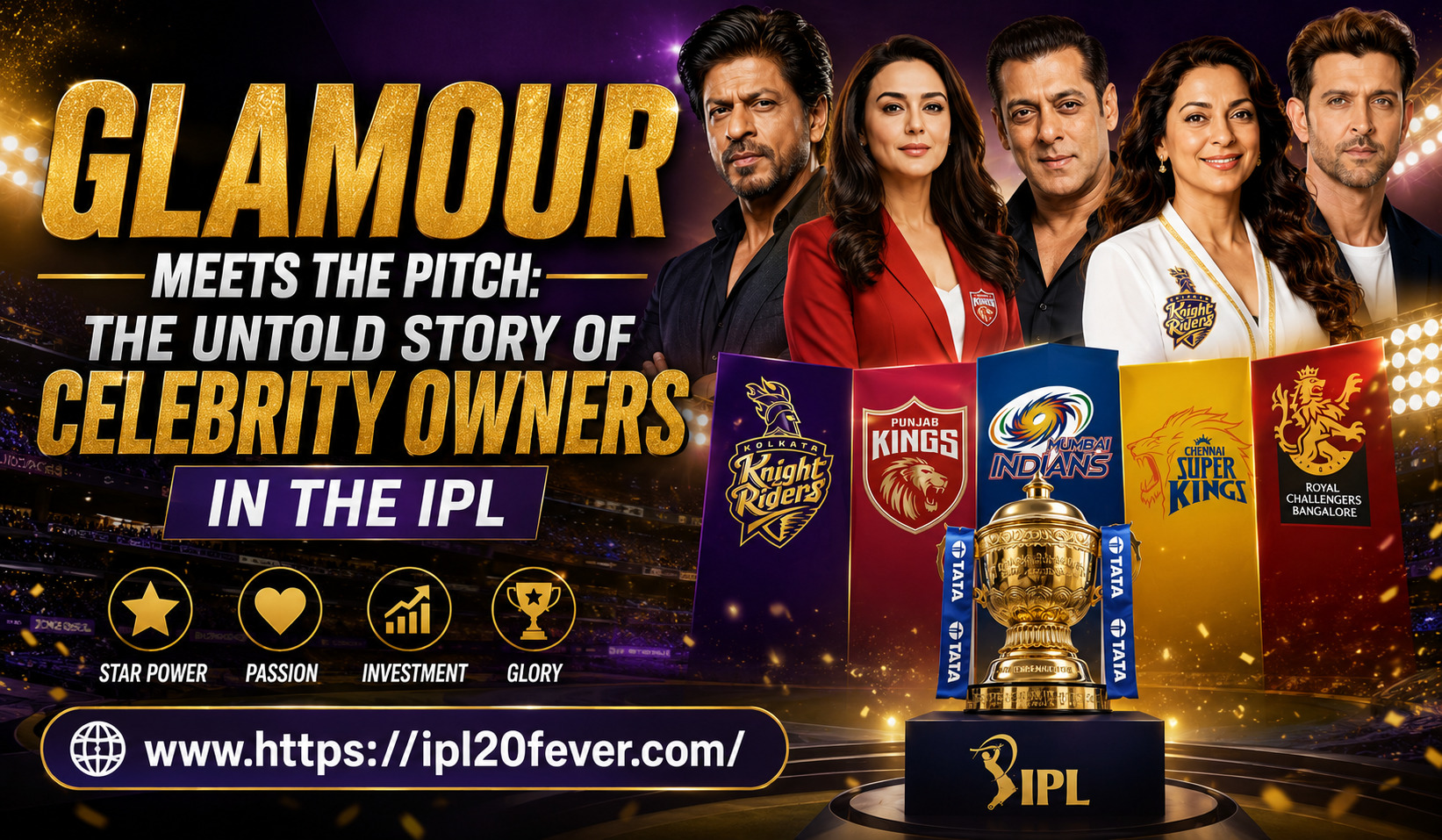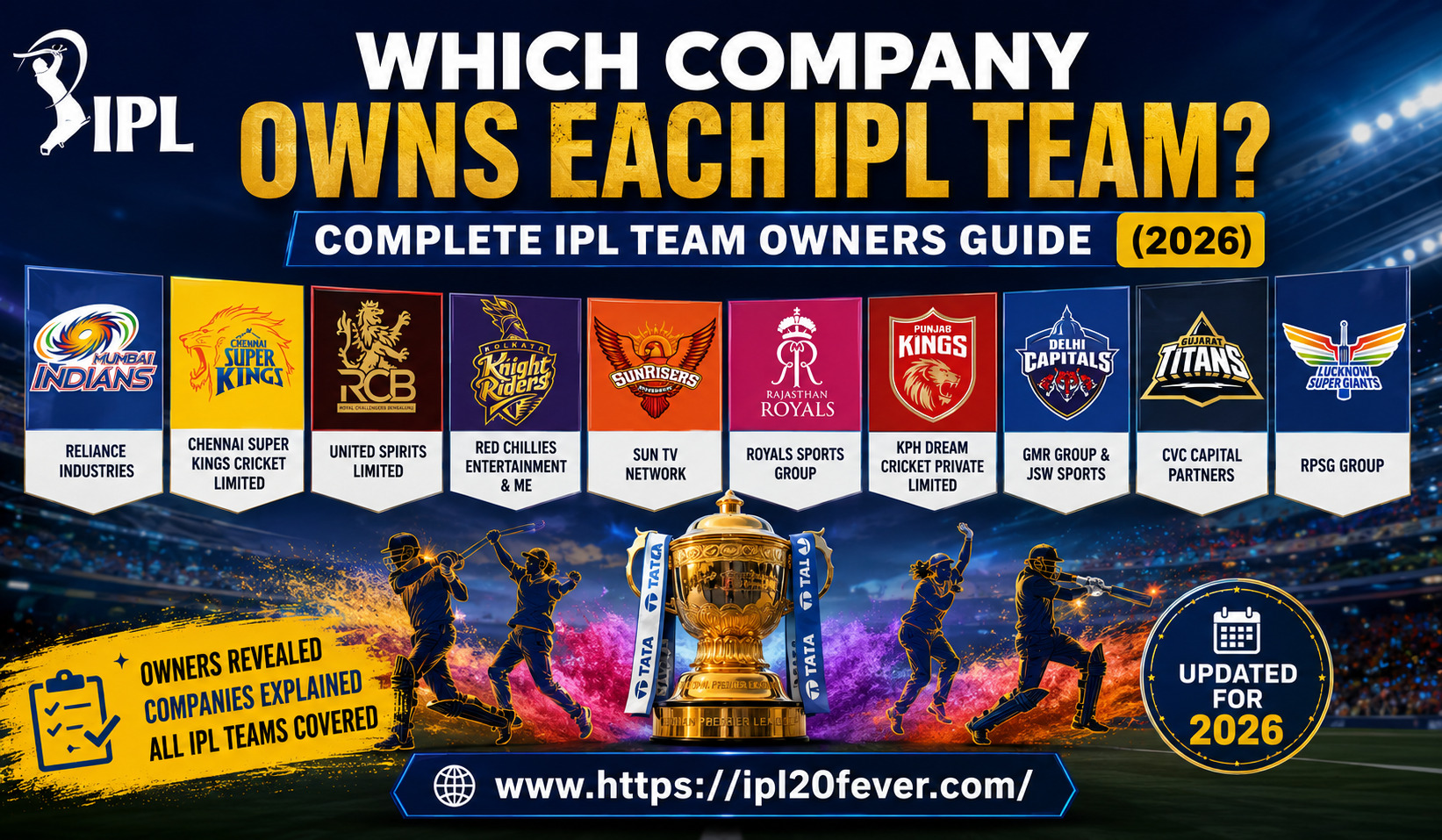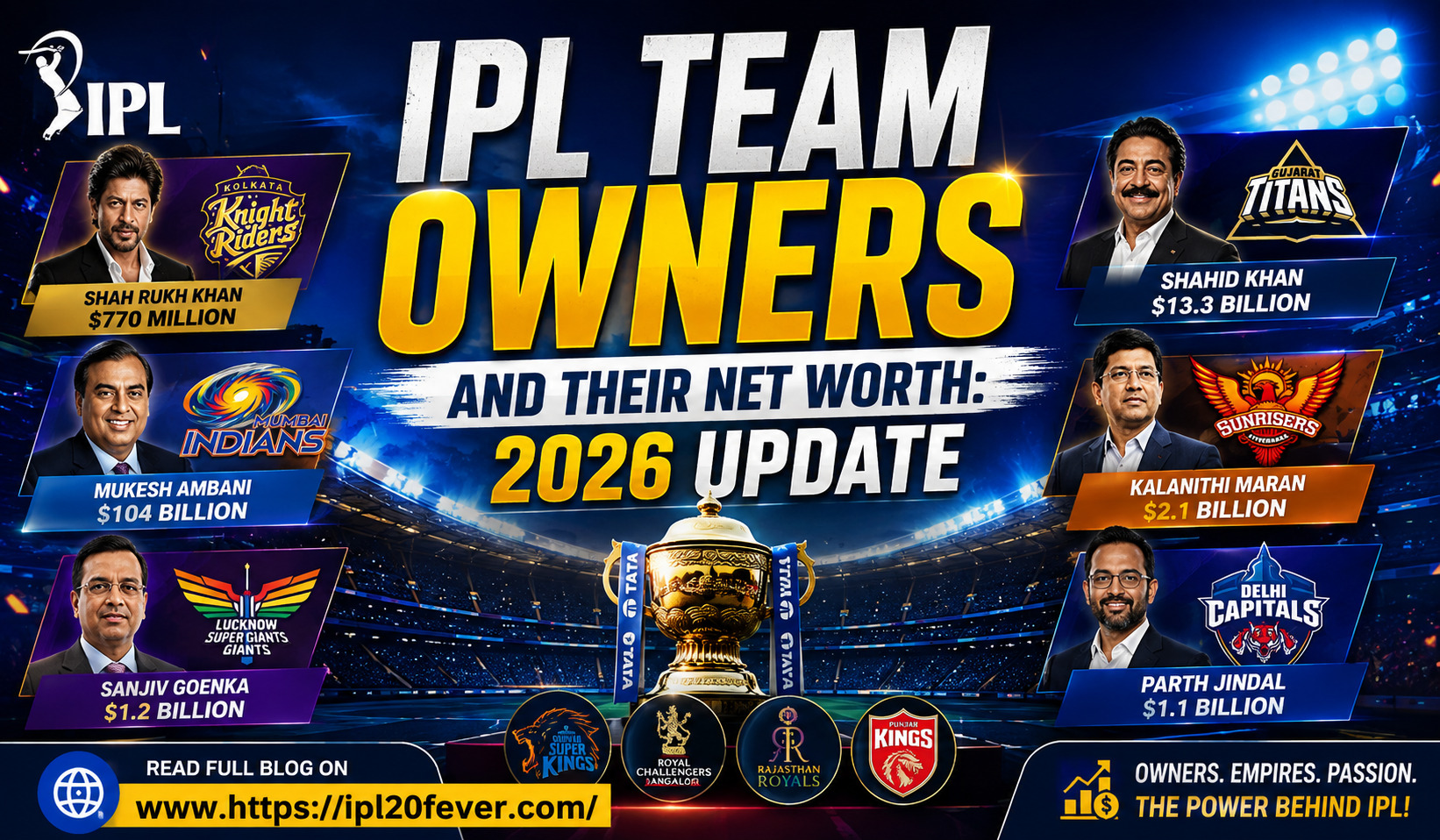
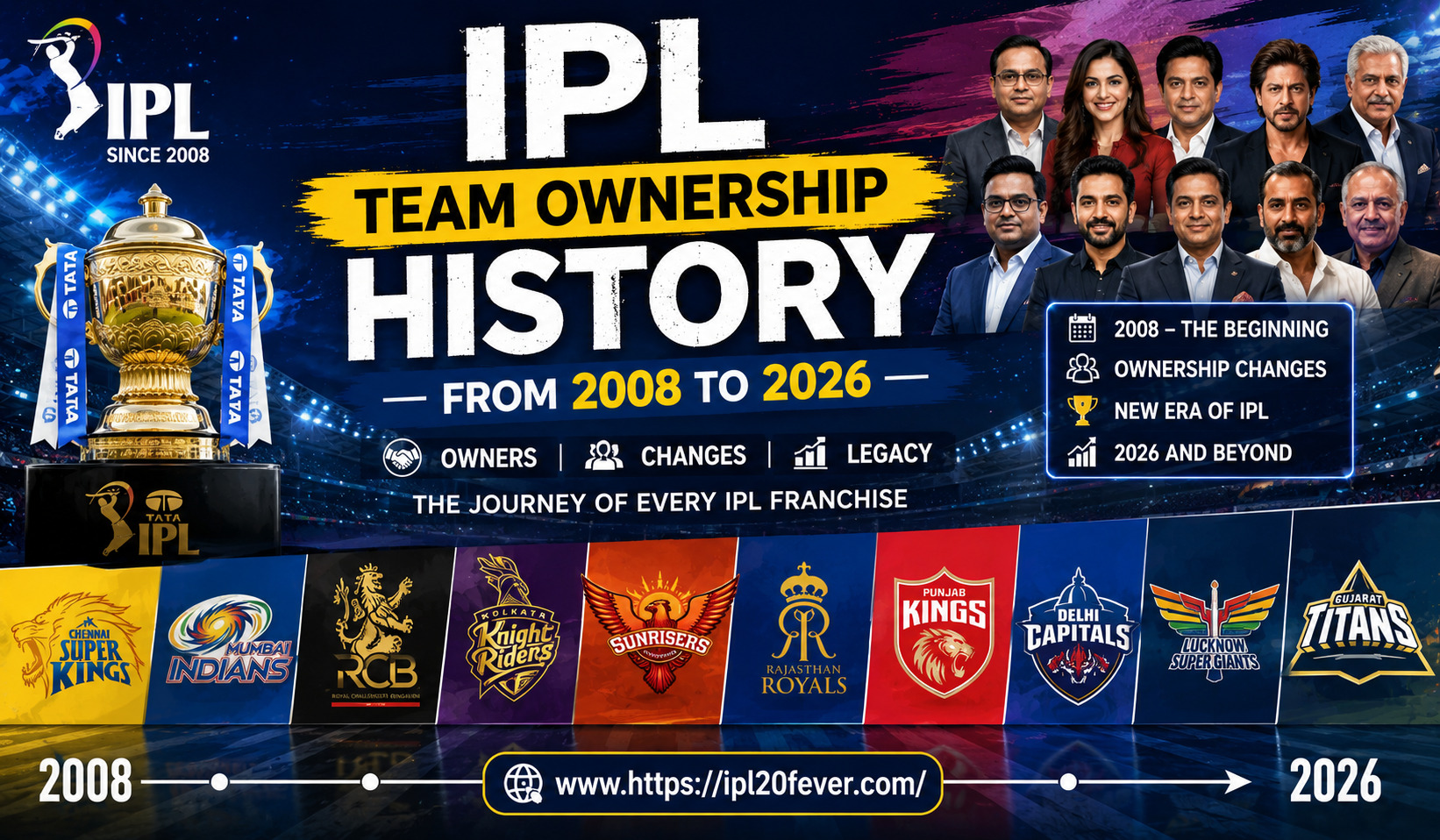
The Indian Premier League started in 2008 as a bold new idea in cricket. Instead of players representing their country, they would now play for city-based teams owned by rich businessmen, big companies, and even film stars. Nobody knew back then just how big this idea would become. Today, IPL teams are worth billions of dollars, and owning one is seen as one of the smartest sports investments in the world.
Let’s look back at how team ownership has changed since the very first season, all the way up to 2026.
The Beginning: Eight Teams, Eight Big Names (2008)
When the IPL was launched, the BCCI (the board that runs Indian cricket) sold eight teams to different owners through an auction. This was a completely new business model for Indian sport, and everyone wanted a piece of it.
Mumbai Indians went to Mukesh Ambani, India’s richest businessman, and his wife Nita Ambani. They paid around 111 million dollars for the team, the highest amount among all eight franchises at the time. Mumbai Indians, backed by Reliance Industries, quickly became known for scouting young talent and building a strong, professional setup around the team.
Chennai Super Kings was bought by N. Srinivasan, who ran the India Cements company, for about 91 million dollars. Chennai became famous for its stability. Unlike most other teams, CSK kept the same core group of players and the same captain, MS Dhoni, for years, which helped build a loyal fan base.
Kolkata Knight Riders was bought by a group led by Bollywood superstar Shah Rukh Khan, along with the Mehta family, who run the Red Chillies Entertainment company. This was one of the most talked-about deals because a movie star was now also a cricket team owner.
Royal Challengers Bangalore, now called Royal Challengers Bengaluru, was bought by liquor businessman Vijay Mallya through his company United Spirits. RCB became known for having some of the biggest cricket stars in its lineup, even though the team took many years to win its first title.
Delhi Daredevils, later renamed Delhi Capitals, was owned by the GMR Group, a company known for building airports and infrastructure projects.
Kings XI Punjab, now called Punjab Kings, had a mixed group of owners. This included businessman Ness Wadia, the Dabur company’s Mohit Burman, actress Preity Zinta, and businessman Karan Paul. This made it one of the more unusual ownership setups in the league.
Rajasthan Royals was bought by a company called Emerging Media, led by Manoj Badale, along with cricketer Shane Warne acting as a face of the team on the field. Rajasthan Royals went on to win the very first IPL title in 2008, which remains one of the biggest underdog stories in the tournament’s history.
Deccan Chargers, based in Hyderabad, was owned by the Deccan Chronicle media group. This team won the title in 2009 but later ran into financial trouble.
Teams That Came and Went
Not every IPL team has survived. A few franchises were shut down over the years, mostly because of money problems or rule violations.
Deccan Chargers struggled with heavy losses and unpaid dues, and the BCCI eventually terminated the franchise in 2012. In its place, a new team called Sunrisers Hyderabad was created. This team was bought by the Sun TV Network, owned by the Maran family. Kalanithi Maran and his daughter Kavya Maran have run the team since then, with Kavya becoming a well-known face at the player auctions.
Kochi Tuskers Kerala was another short-lived team. It joined the IPL in 2011 but was removed just one season later after disagreements between the owners and the BCCI over payments and contract terms.
Pune Warriors India, owned by the Sahara Group, played from 2011 to 2013 before pulling out due to financial losses.
In 2016, Chennai Super Kings and Rajasthan Royals were suspended for two years because of a betting and spot-fixing scandal involving some team officials. During this gap, two temporary teams were added to keep the tournament at eight teams: Rising Pune Supergiant, owned by the Sanjiv Goenka-led RPSG Group, and Gujarat Lions, owned by the Intex Technologies company. Once the suspension period ended, CSK and Rajasthan Royals returned in 2018, and these two temporary teams were removed.
Ownership Changes Along the Way
Even among the teams that survived, ownership has shifted quite a bit over the years.
Royal Challengers Bengaluru saw a big change in 2016. Vijay Mallya ran into serious financial and legal trouble, and control of United Spirits, the company that owned RCB, passed to the global drinks company Diageo. From that point, Diageo owned and ran RCB for about a decade.
Delhi Capitals also changed hands partly. In 2018, GMR Group, the original owner, sold half of its stake to another business group called JSW. Since then, the team has been jointly run by GMR and JSW, and it was also renamed from Delhi Daredevils to Delhi Capitals around the same time.
Punjab Kings has largely kept the same group of owners since 2008, making it one of the more stable ownership stories, even though the team itself was renamed a couple of times over the years.
New Teams Join the League (2022)
After years of having eight teams, the IPL expanded to ten teams in 2022. Two new franchises were added, and both came in with record-breaking price tags.
Gujarat Titans was bought by CVC Capital Partners, a large global investment firm, along with the Torrent Group, an Indian company with interests in power and other industries. In a surprising turn, Gujarat Titans won the IPL title in their very first season, which had never happened before with a brand-new team.
Lucknow Super Giants was bought by Sanjiv Goenka’s RPSG Group for close to 940 million dollars, which was the highest price ever paid for an IPL team at that point. Goenka had previously run the temporary Rising Pune Supergiant team, so this was his second time entering the IPL as an owner.
With these additions, the IPL settled into its current ten-team format, keeping the same set of franchises for the next several seasons.
Big Changes in 2026
After years of ownership staying mostly the same, 2026 turned out to be one of the biggest years for change in IPL history, with two major franchises being sold.
Royal Challengers Bengaluru’s long wait for a first title finally ended in 2025, and soon after, its ownership changed too. Diageo, which had owned the team since 2016, decided to sell RCB completely. In March 2026, the team was bought by a new group of investors for around 1.78 billion dollars, making it the most expensive sale in IPL history. This new group includes the Aditya Birla Group through its cement business, the Times of India Group, an investment firm called Bolt Ventures, the global investment company Blackstone, and American investor David Blitzer. Family members Ananya Birla and Aryaman Birla have taken on public roles in leading the franchise going forward.
Around the same time, Rajasthan Royals, the team that won the very first IPL title back in 2008, also changed hands. The franchise had been run by Manoj Badale and his company Emerging Media for close to two decades. In 2026, it was sold to a group led by entrepreneur Kal Somani, with backing from the Walton family, known for owning Walmart, and the Hamp family, who own the Detroit Lions American football team. This deal was valued at around 1.63 billion dollars.
Together, these two deals were worth more than three billion dollars, showing just how valuable IPL franchises have become. What started as teams worth around 100 million dollars each in 2008 are now worth well over a billion dollars, some even close to two billion.
The Bigger Picture
Looking back at these 18 years, the story of IPL ownership is really a story about how much cricket, and Indian cricket in particular, has grown as a business. Teams that were once owned by a single company or family are now backed by global investment firms, international sports owners, and multiple business groups working together. Franchises have shut down, been renamed, changed owners, and been bought back, but the overall value of owning an IPL team has only gone up.
From Shane Warne lifting the trophy for Rajasthan Royals in 2008 to global investors buying into the league in 2026, IPL ownership has come a long way. And going by how fast things have changed in the last two years alone, this story is far from finished.