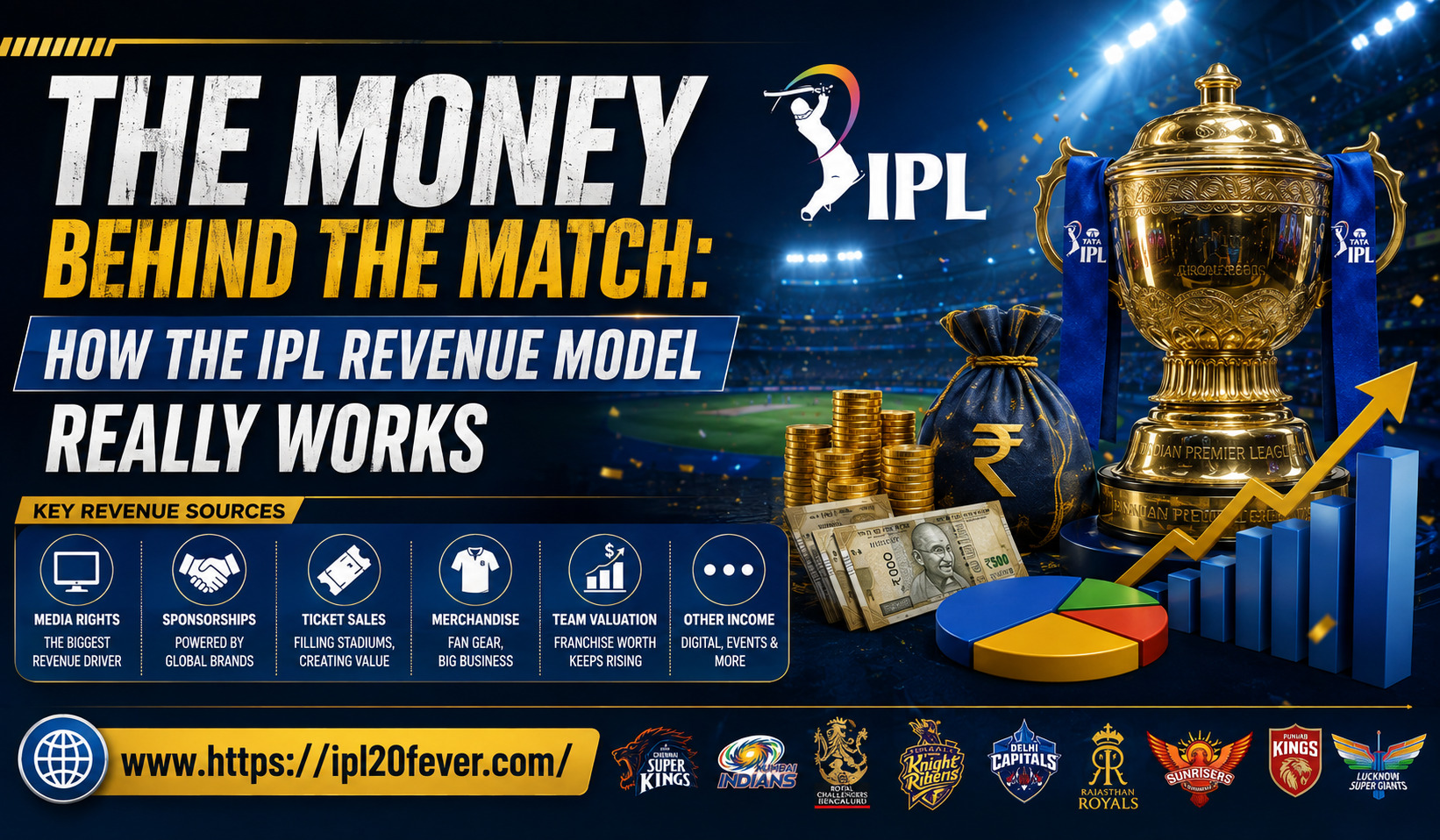
Every summer, millions of cricket fans tune in to watch two months of explosive T20 cricket. We cheer for massive sixes, marvel at acrobatic catches, and celebrate nail-biting last-ball finishes. But behind the floodlights, boundary boards, and roaring crowds lies one of the most profitable and efficient business engines in world sport: the Indian Premier League (IPL).
What started in 2008 as an ambitious blend of cricket and entertainment has grown into a multi-billion-dollar enterprise. In fact, per-match media value puts the IPL in the same elite neighborhood as global sporting giants like the NFL and the English Premier League.
So, how does a two-month cricket tournament generate tens of thousands of crores? How do franchise owners afford to pay players tens of crores for a single season, and still walk away with massive profits?
Let’s break down the IPL revenue model step-by-step, using plain, simple language and no overwhelming financial jargon.
1. The Core Ecosystem: Who Are the Big Players?
To understand how money flows in the IPL, you first need to understand the main characters involved in the business:
- The BCCI (Board of Control for Cricket in India): Think of the BCCI as the founder and overall boss of the IPL. They organize the tournament, sign global broadcasting deals, get main sponsors, and set the ground rules.
- The Franchises (The Teams): These are the 10 team owners (like the Mumbai Indians, Chennai Super Kings, and Royal Challengers Bengaluru). They run their respective teams like corporations, buying players, hiring coaches, and promoting their team brands.
- The Broadcasters & Streamers: TV channels and digital apps that pay astronomical fees to show the matches live to viewers around the world.
- The Brands & Sponsors: Companies ranging from global tech giants to household Indian brands that pay to put their logos on shirts, boundary boards, and commercial breaks.
Now, let’s explore how all these pieces fit together to create a non-stop cash-generating machine.
2. The Golden Pool: Centralized Revenue
The biggest secret behind the IPL’s financial stability is what is known as the Central Pool.
Instead of letting every team scramble for TV deals or tournament-wide sponsorships individually, the BCCI collects a massive bucket of money centrally. Once that bucket is full, the BCCI keeps roughly 50% to run the league, invest in grassroots cricket, and build infrastructure. The remaining 50% is divided equally among all 10 franchises.
This central pool is built on two main pillars:
A. TV and Streaming (Media Rights)
This is by far the biggest source of income in the IPL, making up over 60% to 70% of the total revenue.
Every few years, the BCCI auctions off the rights to broadcast IPL matches on television and stream them on digital platforms. Because millions of people watch IPL matches live, media companies fight fiercely to secure these rights.
When the BCCI sold the media rights for the 2023–2027 cycle, it fetched a staggering ₹48,390 crore (roughly $6 billion). Because half of this central income is shared equally, every single franchise gets a massive payout—around ₹400 to ₹480 crore per year—just for showing up and participating.
[ Total Media Rights & Central Sponsorships ]
│
▼
┌─────────────────────┐
│ BCCI Central Pool │
└──────────┬──────────┘
┌─────────────────┴─────────────────┐
▼ ▼
BCCI Retains ~50% Shared ~50% Equally
(Operations, Infrastructure) (Divided among 10 Teams)
B. Central Sponsorships (League Level)
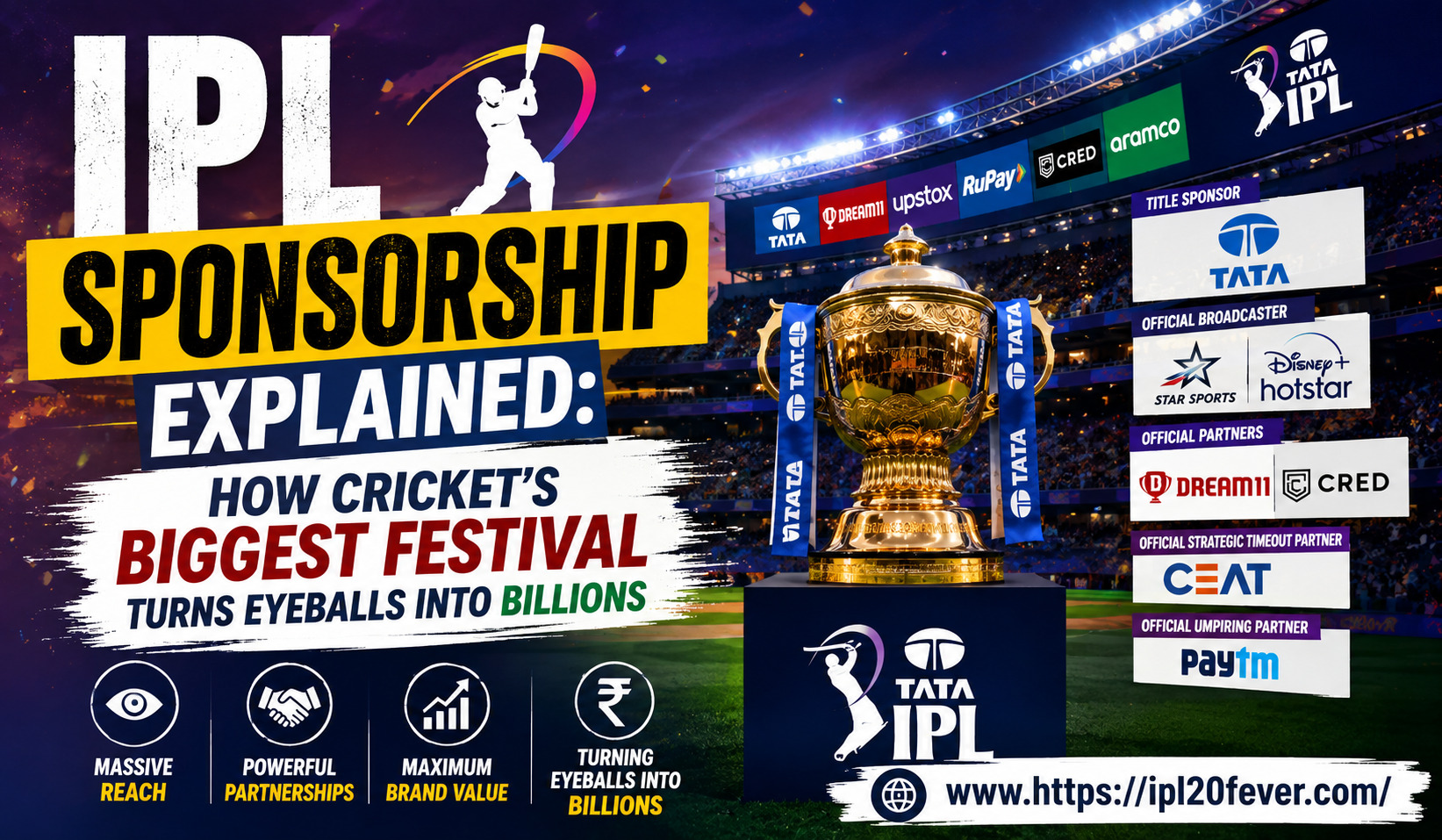
Have you ever noticed how commentators refer to the tournament as the “TATA IPL”? That prefix is bought through a Title Sponsorship deal negotiated directly by the BCCI.
In addition to the title sponsor, the league signs deals with official associate partners (such as official umpire partners, strategic time-out partners, and display partners). All this sponsorship money goes into the same central pool and gets shared with the teams.
Why the Central Pool Matters:
Because every team receives an equal share of the central pool, even a team that finishes at the bottom of the points table earns hundreds of crores guaranteed. This prevents weaker teams from going broke and keeps the entire league financially balanced.
3. Team-Specific Revenue: How Franchises Fill Their Own Pockets
While the central pool provides a safety net, franchises don’t just sit back and rely on the BCCI’s check. Teams work hard to build their own unique revenue streams, which are kept entirely by the team owners.
Here is how franchises earn money on their own:
A. Jersey and Team Sponsorships
Take a close look at a player’s jersey during a match. You will spot logos everywhere:
- Principal Sponsor: The main logo right across the chest (the most expensive real estate).
- Chest Badge & Back Logos: Logos on the top left chest and across the back of the shirt.
- Sleeve & Helmet Sponsors: Smaller placements on arms, caps, and helmets.
Popular teams with massive fan followings, like Chennai Super Kings, Mumbai Indians, or Royal Challengers Bengaluru, can easily collect ₹70 crore to ₹100+ crore per season just from team sponsorships. Brands pay top rupee because the player’s chest is constantly on camera throughout a live broadcast.
B. Ticket Sales and Gate Receipts
During the IPL, teams play seven “home” matches at their local stadium. The home franchise gets to keep a major portion of the revenue generated from ticket sales for these games.
A single home game can generate anywhere between ₹4 crore and ₹7 crore in ticket sales, depending on stadium size and ticket pricing. Multiply that by seven home games, and a team makes ₹30 crore to ₹50+ crore per season just from fans filling up the seats.
C. Food, Beverage, and In-Stadium Advertising
When you buy a cold drink, a box of popcorn, or a team flag inside the stadium, the franchise takes a cut. Teams rent out stall spaces to food vendors and charge premium prices for corporate hospitality boxes. Additionally, banners inside the home stadium provide another extra revenue channel.
D. Official Merchandise
Fans love wearing their team’s color. From replica jerseys and caps to keychains, phone cases, and hoodies, official team merchandise brings in solid revenue. While merchandise traditionally accounted for a smaller slice of the pie in India compared to Western sports leagues, e-commerce growth has pushed merchandise earnings to ₹10 crore to ₹20 crore annually for top franchises.
E. Digital Content and Social Media
Modern sports teams are essentially media companies. Franchises invest heavily in behind-the-scenes vlogs, player interviews, fun challenges, and social media videos. By building massive followings on YouTube, Instagram, and X, teams monetize their content through digital brand integrations and ad revenues.
F. Prize Money
Winning isn’t just good for pride—it pays directly. The IPL allocates a total prize pool for top-performing teams. The winning team typically walks away with around ₹20 crore, the runner-up receives around ₹13 crore, and the remaining playoff teams split smaller portions. By tradition, most franchises split a major part of this prize money with the players and support staff as a performance bonus.
4. The Expense Side: Where Does All That Money Go?
With hundreds of crores coming in every single year, running an IPL franchise sounds like a dream. But running a top-tier sports franchise isn’t cheap. Franchise owners face several major expenses:
| Expense Category | Description | Estimated Impact |
| Player Salaries | The money spent at player auctions to build the squad. | Up to ₹120 crore (The Purse Limit) |
| Franchise Fees | Annual fee paid to the BCCI for owning the franchise rights. | ~10% of the initial purchase valuation |
| Support Staff & Operations | Coaches, physios, analysts, management, and administrative personnel. | ₹15 – ₹30 crore annually |
| Logistics & Travel | Flights, 5-star hotel bookings, local transport for a 30-35 person group. | ₹10 – ₹20 crore annually |
| Marketing & Fan Events | Pre-season camps, ad campaigns, fan park events, and promotional shoots. | ₹10 – ₹20 crore annually |
Despite these heavy operational expenses, the sheer size of the central pool guarantees that almost every IPL team operates with a healthy profit margin year after year.
5. Why Is the IPL Business Model So Unstoppable?
Many sports leagues around the world struggle to stay profitable, with clubs frequently losing money or facing bankruptcy. Why has the IPL succeeded so effortlessly where others have failed?
1. The Power of “Prime Time” Entertainment
In India, cricket isn’t just a sport; it is daily prime-time entertainment. The IPL takes place during the summer months when schools are out, making it prime family viewing time. Broadcasters get guaranteed high viewership for 60+ consecutive days, allowing them to charge top rates for 10-second ad slots during matches.
2. Built-in Scarcity Value
There are only 10 IPL franchises. The BCCI strictly controls league expansion. Because demand from global investors and major Indian business conglomerates is sky-high, but the supply of teams is capped, the valuation of existing franchises keeps soaring. Teams that were bought for under $100 million in 2008 are now valued at well over $1 billion each.
High Fan Engagement ➔ High TV Viewership ➔ Sky-High Media Rights ➔ Massive Central Pool ➔ Profitable Franchises
3. The Closed-League Format
Unlike European football leagues where bottom teams face “relegation” (being dropped to a lower division), the IPL uses a closed-league model similar to American sports leagues (NFL, NBA). A franchise can never be demoted. This guarantee gives investors complete confidence to put billions into a team without worrying that a bad season will destroy their investment.
6. Going Global: The Future of IPL Franchises
IPL owners are no longer satisfied with running a business for just two months a year in India. They are taking the IPL playbook global.
Major IPL franchise owners have purchased teams in other global T20 leagues:
- South Africa (SA20): All six teams in SA20 are owned by IPL franchise parent companies.
- Caribbean (CPL): Teams like Kolkata Knight Riders own the Trinbago Knight Riders.
- United States (Major League Cricket): Teams like Mumbai Indians (MI New York) and CSK (Texas Super Kings) have set up shop in the American market.
By operating cricket teams year-round across different continents, these companies build multi-league global brand empires. A single sponsor can now negotiate a package deal to feature on a team’s shirt in India, South Africa, and the United States simultaneously.
Final Thoughts: A Masterclass in Sports Economics
The Indian Premier League is a perfect business engine where sport, media, and marketing work in complete harmony.
The BCCI manages the big picture—securing mega broadcast deals and high-value corporate sponsorships. The central pool ensures that every team stays financially healthy. Individual franchises build fan loyalty and team-level sponsorships, while players are rewarded with life-changing contracts.
The next time you watch an IPL match and see a batsman hit a ball out of the park, remember that every single detail on your screen—from the logo on his helmet to the app streaming the action—is part of a carefully tuned economic machine that turned a cricket tournament into one of the most valuable sports brands on Earth.