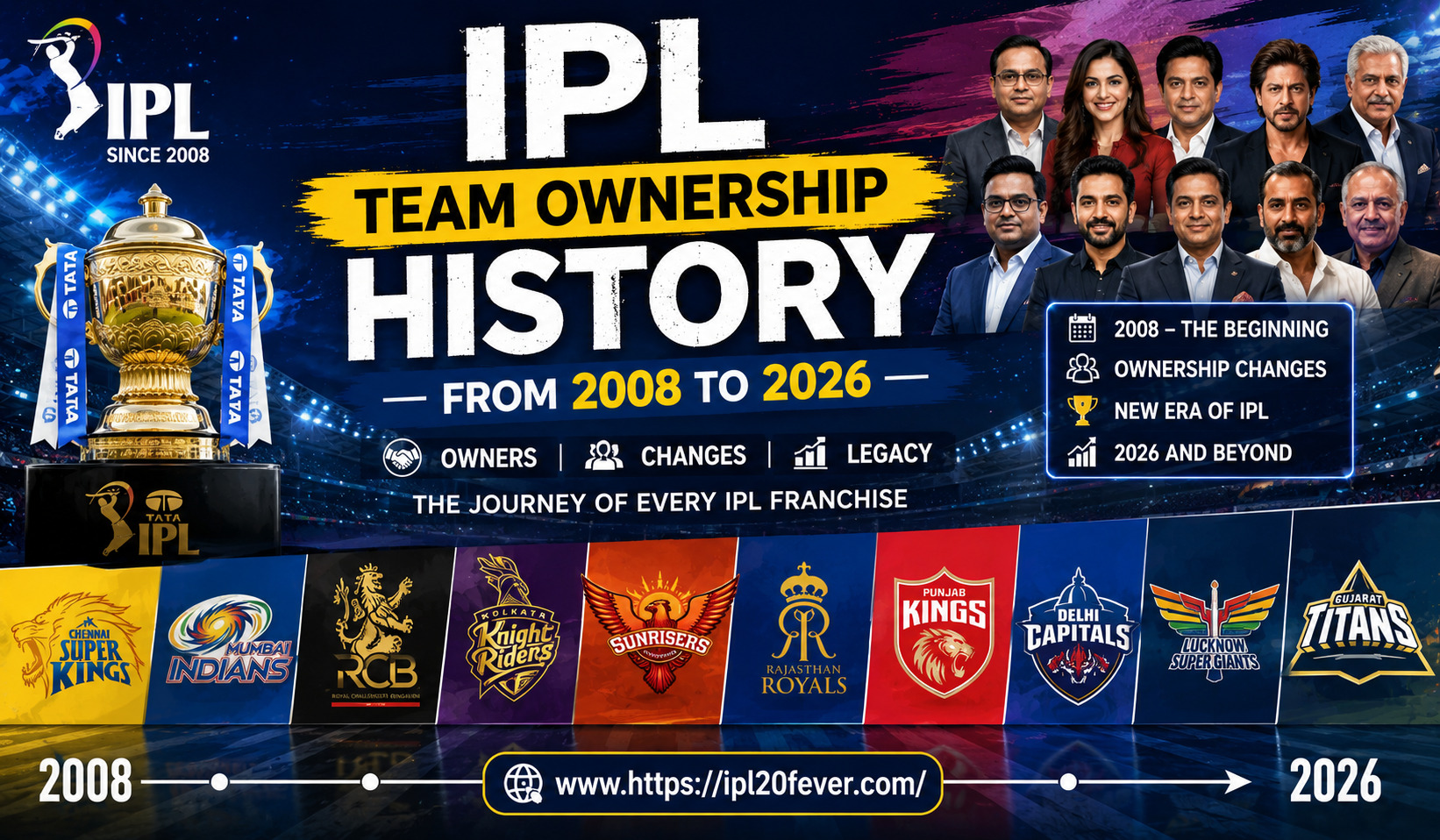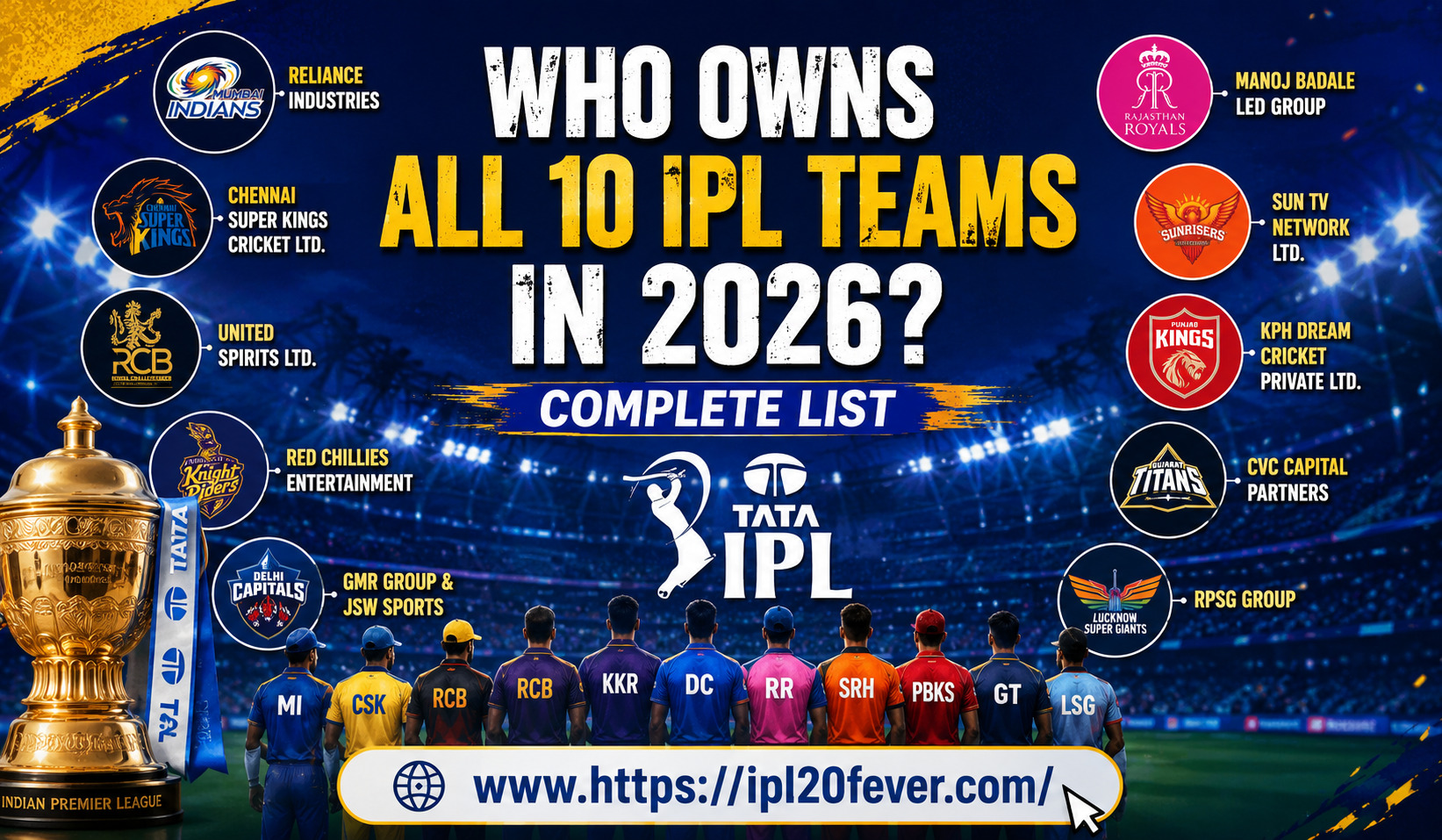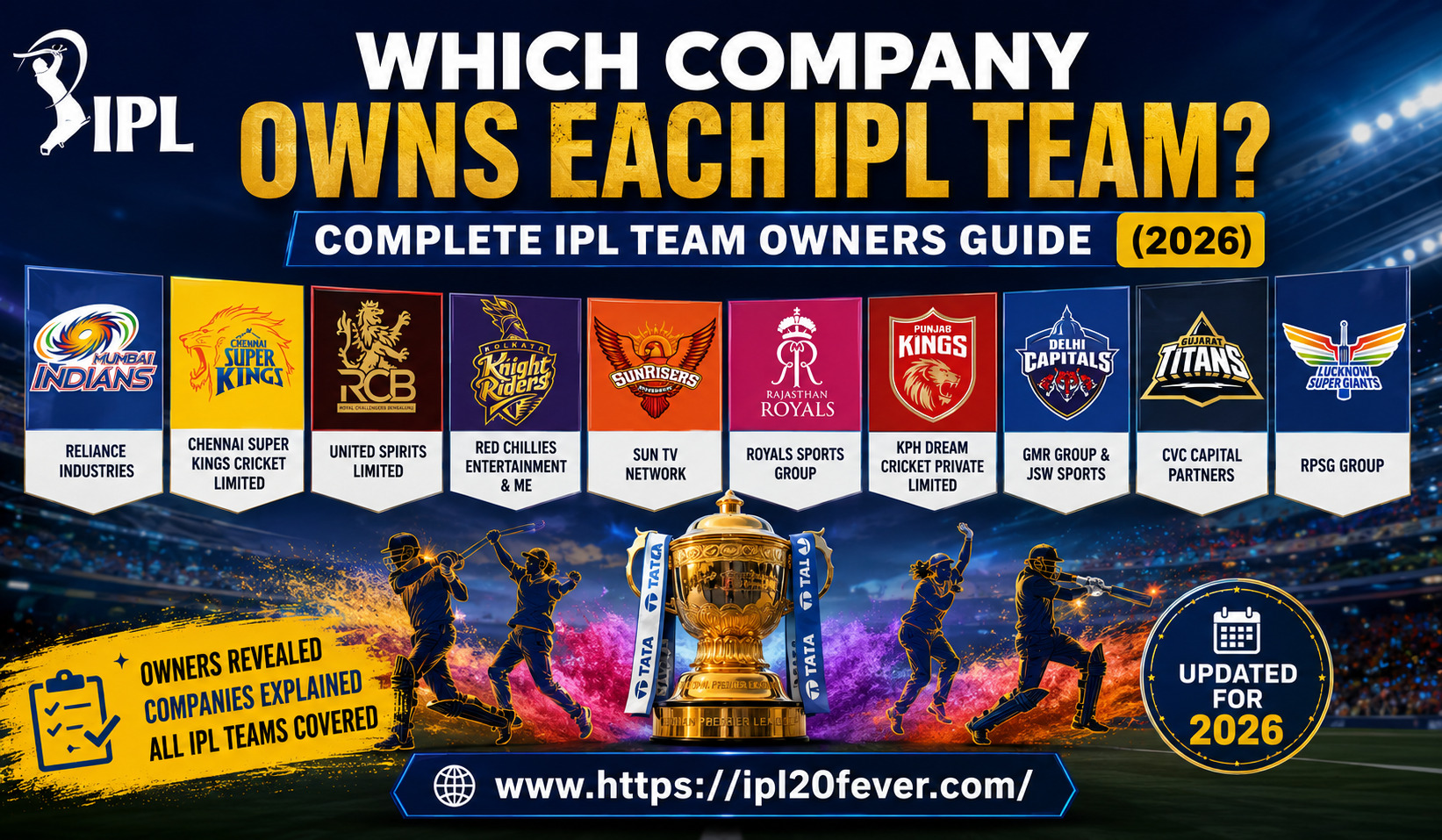
If you love cricket and follow the Indian Premier League, you already know Chennai Super Kings. The yellow jersey, the roaring crowd at Chepauk, and the calm face of MS Dhoni have made CSK one of the most loved teams in the country. But have you ever wondered who actually owns this team? Who puts in the money, who takes the big decisions, and who has changed over the years?
In this blog, we will walk through the complete ownership story of Chennai Super Kings in simple words. No confusing business terms, just plain facts explained the easy way.
The Beginning: How CSK Was Born in 2008
When the IPL started in 2008, the BCCI decided to sell team franchises to different companies and individuals through an auction. Each city got its own team, and companies bid huge amounts of money to own these teams.
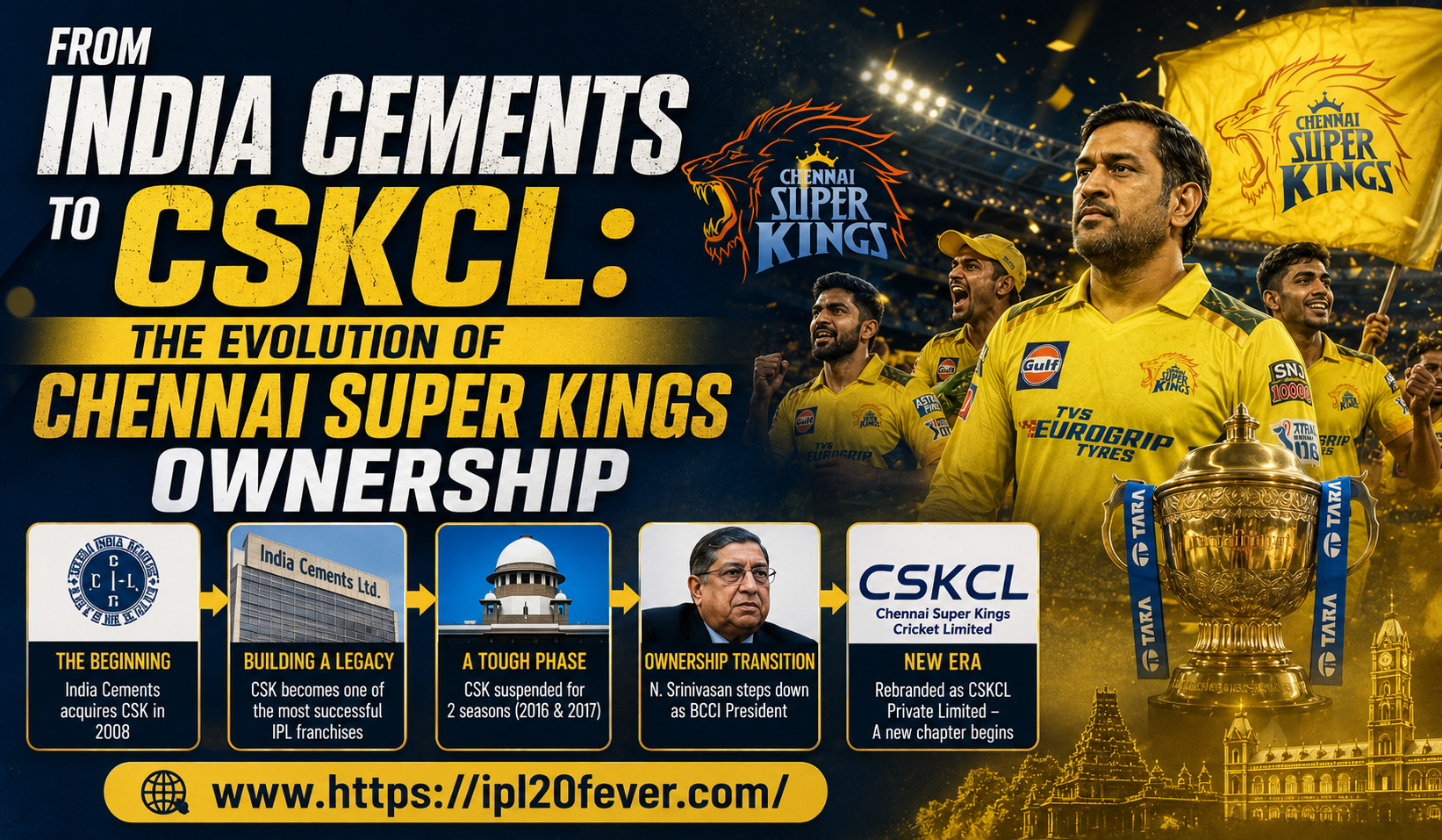
For Chennai, it was a company called India Cements that won the bid. India Cements paid around 91 million US dollars to own the Chennai team, and this amount was to be paid over ten years. India Cements is a well known cement manufacturing company from South India, and its chief was a man named N. Srinivasan.
So right from day one, the man behind Chennai Super Kings was N. Srinivasan, and the company that officially owned the team was India Cements.
Who Is N. Srinivasan?
To understand CSK’s ownership, you first need to understand N. Srinivasan a little. He was born in 1945 in Tamil Nadu and built his career in the cement business. Over the years, he became one of the most powerful people in Indian cricket. He held major positions in the Board of Control for Cricket in India, the BCCI, including serving as its president for a period.
Because he was both a top official in Indian cricket and the owner of an IPL team at the same time, this later became a subject of debate. Many felt this was a conflict of interest since the same person controlled both the sport’s governing body and one of its teams. This is important to remember because it plays a role in the controversy that hit CSK a few years later.
The 2013 Betting Scandal That Shook CSK
In 2013, Indian cricket witnessed one of its biggest controversies. Players from another IPL team, Rajasthan Royals, were arrested on charges connected to spot fixing. As investigations continued, the spotlight soon turned toward Chennai Super Kings as well.
Gurunath Meiyappan, who held the role of Team Principal at CSK, was arrested. He also happened to be N. Srinivasan’s son in law. Investigators found that he was involved in betting on IPL matches, including matches played by his own team. He was even accused of passing on inside team information to bookies.
This scandal created massive shock waves across the cricket world, especially because it happened right before the CSK versus Mumbai Indians final in 2013.
The Supreme Court Steps In
Because of how serious the allegations were, the Supreme Court of India got involved. In 2015, the Court appointed a special three member committee headed by former Chief Justice R. M. Lodha to investigate the matter thoroughly. This came to be known as the Lodha Committee.
After months of investigation, the committee found Gurunath Meiyappan guilty of betting and bringing disrepute to the game. A similar finding was made against Raj Kundra, who was linked to Rajasthan Royals at the time.
The punishment was harsh. Both Meiyappan and Kundra received lifetime bans from any cricket related activity organized by the BCCI. And both teams, Chennai Super Kings and Rajasthan Royals, were suspended from playing in the IPL for two whole years, covering the 2016 and 2017 seasons.
During this ban, CSK players including MS Dhoni had to play for other teams. Dhoni, for instance, joined a newly formed franchise for those two seasons. Fans of the yellow army had a tough time watching their favourite players wear different colours, but the team eventually made a strong comeback.
The Big Ownership Change in 2015
While all this controversy was unfolding, something important was also happening on the business side. In February 2015, the Board of Directors of India Cements approved a plan to separate Chennai Super Kings from the parent company. This was not a punishment, but a restructuring move.
A brand new company was formed, called Chennai Super Kings Cricket Limited, often shortened to CSKCL. This new company was created in December 2014 and became the official owner of the team starting January 2015.
Here is the interesting part. Instead of India Cements holding onto the team directly, the ownership shares were distributed among the existing shareholders of India Cements. In simple words, people who already owned shares in the cement company automatically became shareholders in the cricket team company too, based on how many India Cements shares they held.
This meant thousands of small investors technically became part owners of Chennai Super Kings. However, the real control remained with the Srinivasan family, since they held a large chunk of shares themselves.
So from that point onward, CSK was no longer directly under India Cements. It became its own separate public limited company, CSKCL, even though it is not listed on the stock exchange for regular trading.
CSK’s Comeback in 2018
After serving the two year ban, Chennai Super Kings made a grand return to the IPL in 2018. And what a comeback it was. The team, led once again by MS Dhoni, won the IPL title in their very first season back. This victory meant a lot to the fans who had stayed loyal throughout the difficult phase.
Since then, CSK has continued to be one of the strongest teams in the tournament, adding more titles to their name in the following years and cementing their place as one of the most successful and most loved franchises in IPL history.
The Ownership Structure Today
As of now, Chennai Super Kings Cricket Limited remains the official owner of the team. The company works completely separately from India Cements in terms of daily operations, even though the same family sits at the top of both businesses.
The Srinivasan family holds a controlling stake in CSKCL. N. Srinivasan continues to be a guiding figure as Chairman, while his daughter, Rupa Gurunath, has taken on a very active role in running the franchise. She previously served as the President of the Tamil Nadu Cricket Association, becoming the first woman to hold that position in India, and today she is deeply involved in the day to day matters of CSK, from player auctions to match day decisions.
Because thousands of small shareholders also hold pieces of CSKCL through their earlier India Cements shares, CSK has often been described as having a somewhat public ownership structure compared to other IPL teams that are usually owned by a single business group or a small set of partners.
What About the UltraTech and India Cements Deal?
In 2024, there was a major development involving India Cements itself. UltraTech Cement, a company from the large Aditya Birla Group, announced that it was buying a big stake in India Cements from its promoters. This deal made a lot of news because people wondered if this also meant a change in who owns Chennai Super Kings.
The answer, according to CSK officials, is no. The CEO of CSKCL clearly explained that Chennai Super Kings and India Cements are two completely different entities now. Even though N. Srinivasan was stepping away from his ownership in India Cements because of this deal, it had no direct effect on Chennai Super Kings. The team continued to be owned and controlled by CSKCL, with the Srinivasan family still holding the majority stake in the cricket company.
So while the cement business changed hands, the cricket team stayed exactly where it was, firmly with the family that built it.
Wrapping Up
The ownership journey of Chennai Super Kings is more layered than most fans realise. It started with India Cements winning the bid in 2008, went through a major restructuring in 2015 that created CSKCL, faced a painful two year ban due to the betting scandal, made a heroic comeback in 2018, and continues today under the same family that started it all, even as the parent cement company changes hands in the corporate world.
Through all these ups and downs, one thing has remained constant. The passion of CSK fans and the yellow jersey that represents the team have stayed strong, no matter what happens in the boardrooms behind the scenes.