The Indian Premier League is not just about sixes, wickets, and nail-biting finishes. Behind every team on the field stands a group of very rich and very powerful people who own the franchise. These owners are the ones who put in the money, take the big decisions, and turn a cricket team into a business worth hundreds of millions of dollars.
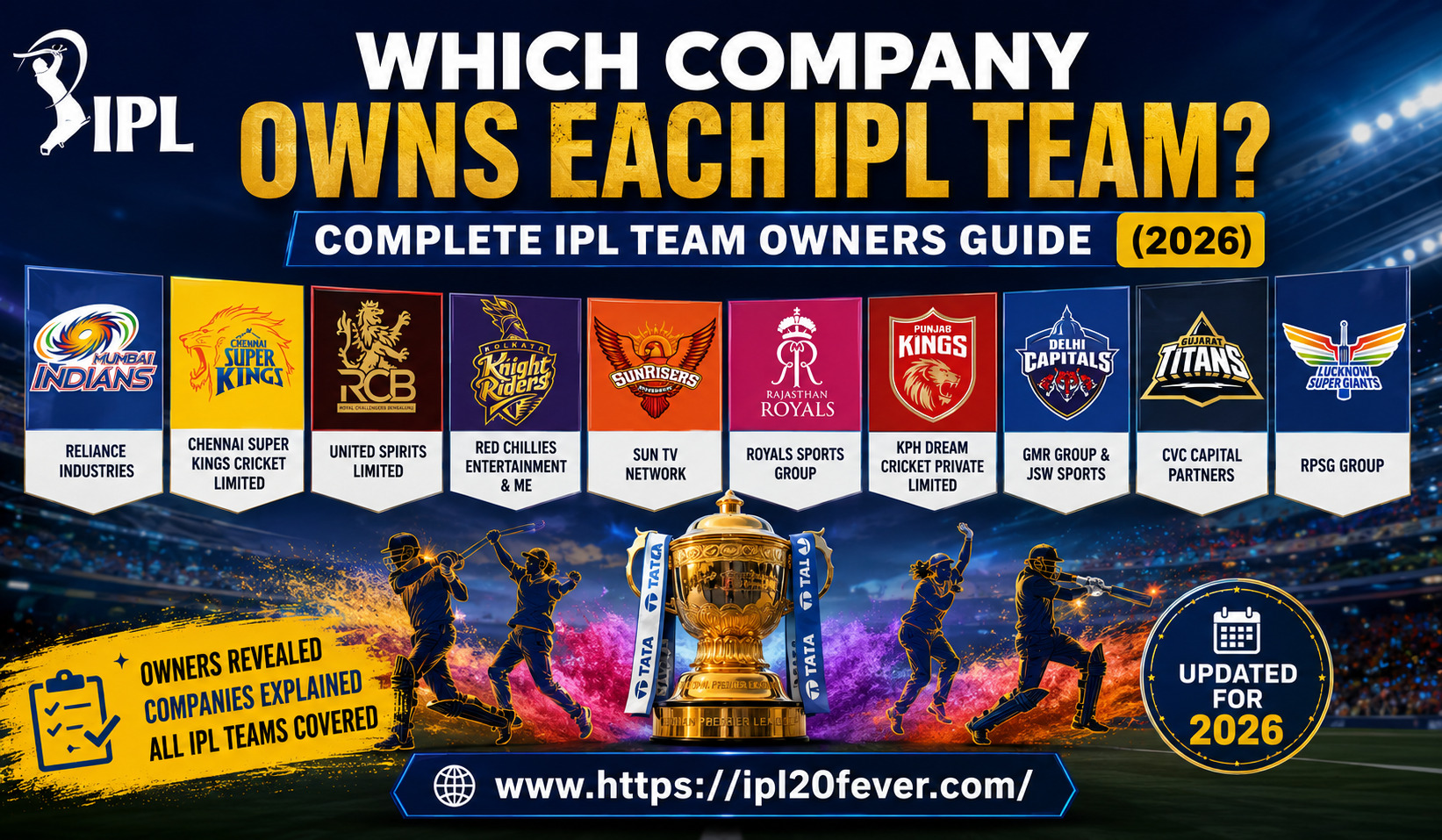
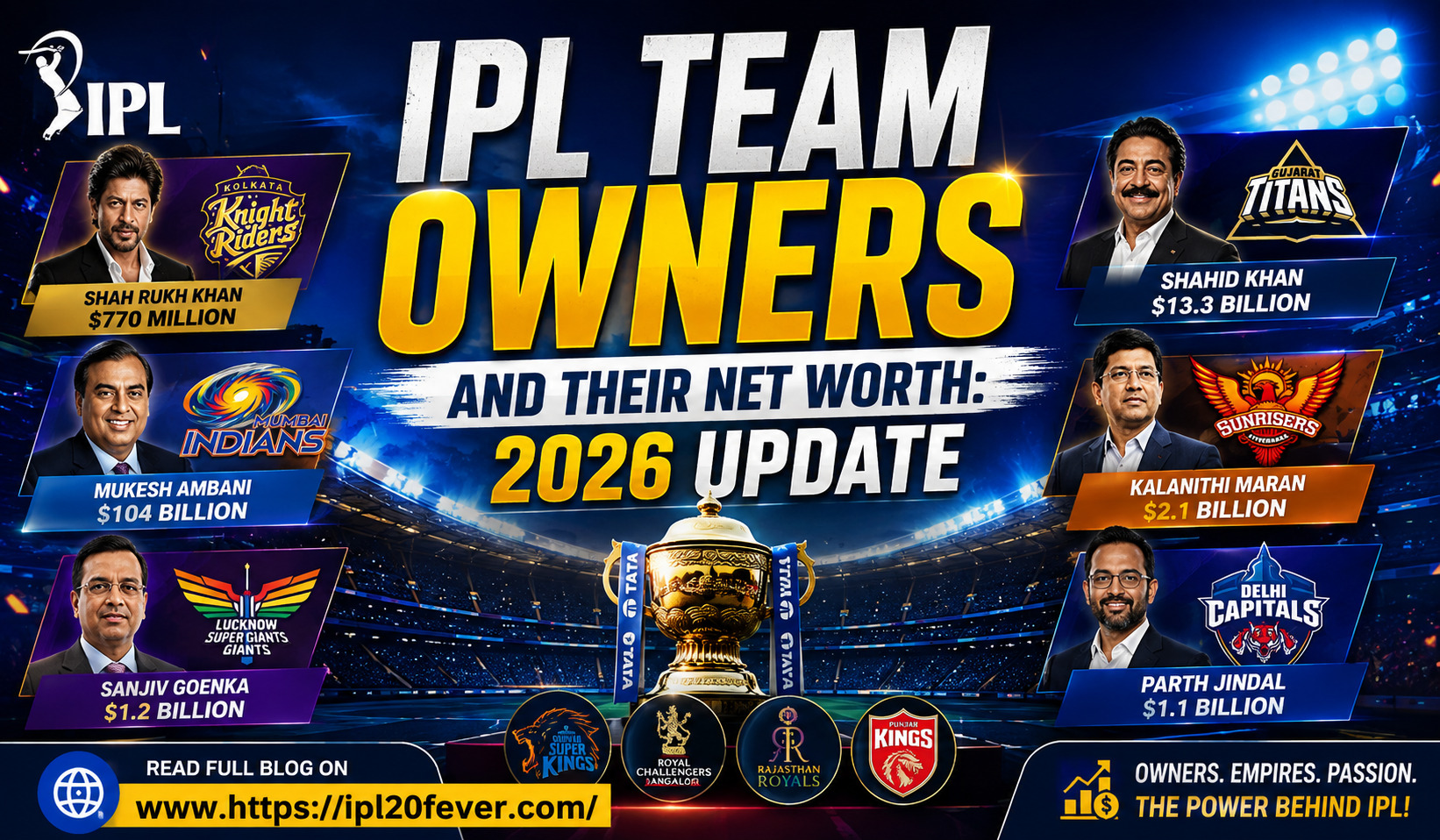
In 2026, the IPL has become bigger than ever, with a mix of business tycoons, film stars, and large companies running the ten teams. This year has also seen some major changes in ownership, with two teams changing hands for record prices. Let’s take a simple, easy-to-understand look at who owns each IPL team today and roughly how much money stands behind them.
A quick note before we start: net worth numbers for owners and companies are not fixed. They change with the stock market, business performance, and how different reports calculate them. So the figures here should be seen as rough estimates collected from various public reports, not exact bank balances.
Mumbai Indians – The Ambani Family
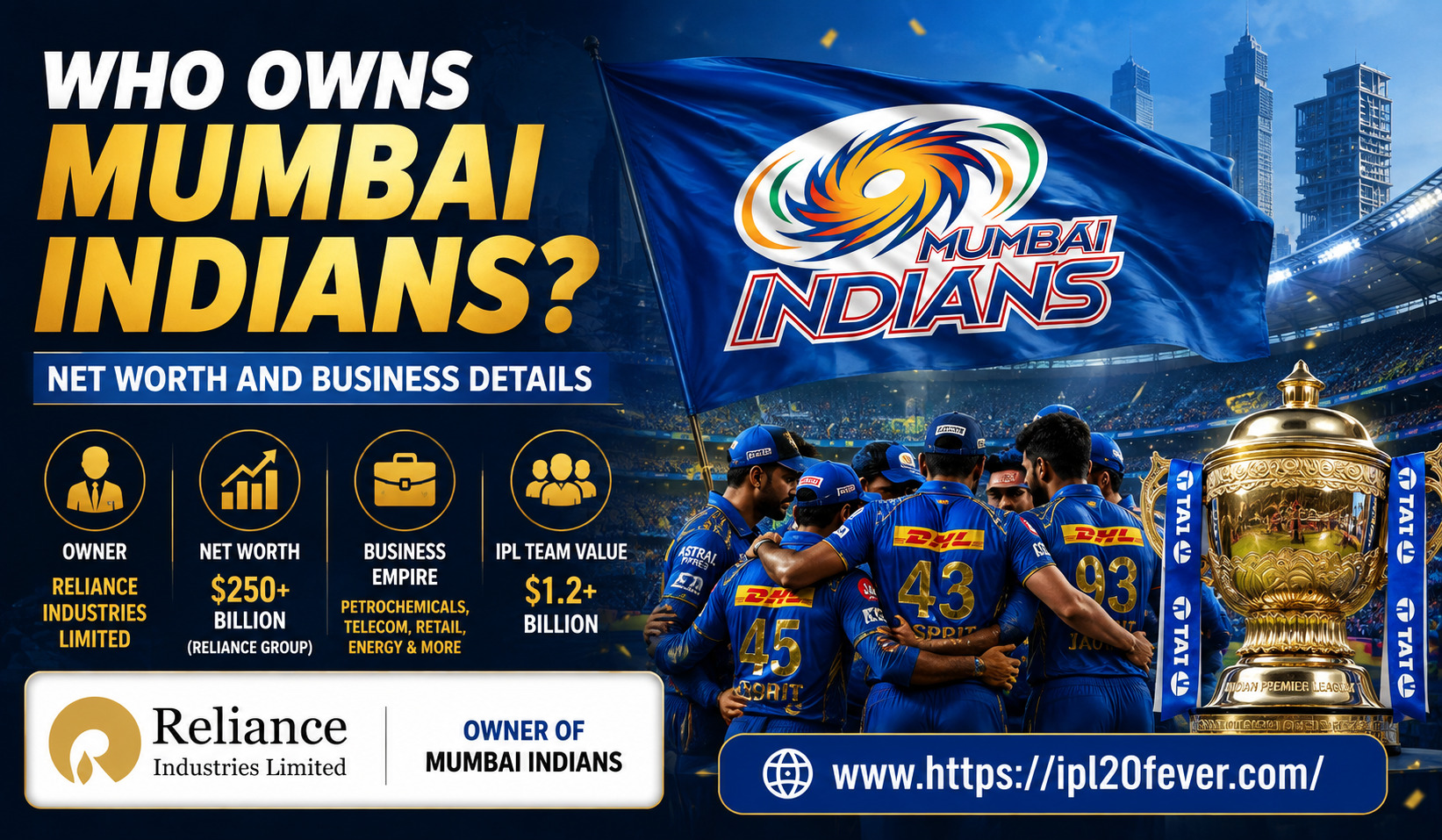
Mumbai Indians has been owned by Mukesh Ambani and his wife Nita Ambani since the very first season of the IPL in 2008. Their company, Reliance Industries, runs the team through a group called IndiaWin Sports. Mukesh Ambani is widely seen as the richest person owning any IPL team, with different reports placing his personal wealth anywhere between 90 and 100 billion dollars.
Mumbai Indians is also one of the most successful teams in IPL history, having won the title five times. A big reason for this success is simple: with the Ambani family’s massive resources behind them, the team can spend big on top players and world-class facilities without worrying too much about money.
Chennai Super Kings – N. Srinivasan and India Cements
Chennai Super Kings, one of the most loved and consistent teams in the league, is owned by India Cements, with N. Srinivasan as the main figure in charge. He has led the team since 2008, except for a two-year gap in 2016 and 2017 when CSK was suspended after a betting scandal involving a member of the ownership group.
Srinivasan’s personal wealth is estimated to be in the range of a few billion dollars, though reports differ quite a bit on the exact number. What everyone agrees on is that CSK is one of the most valuable and stable franchises in the IPL, thanks to its loyal fan base and steady performance on the field.
Kolkata Knight Riders – Shah Rukh Khan and Partners
Kolkata Knight Riders is owned by Bollywood superstar Shah Rukh Khan through his company Red Chillies Entertainment, along with actress Juhi Chawla and her husband Jay Mehta. This group bought the team in 2008 and has held on to it ever since, making KKR one of the few franchises with unchanged ownership since the league began.
Shah Rukh Khan’s personal wealth is often estimated at several hundred million dollars, though some reports value it much higher when his business interests are included. What makes KKR special is not just the money but the star power. Shah Rukh Khan is a familiar face at matches, often seen celebrating with players, and this has helped KKR build a fan base that stretches well beyond India. The same ownership group also runs cricket teams in other countries, including the Caribbean and the United States.
Royal Challengers Bengaluru – A Major Ownership Change
For a long time, Royal Challengers Bengaluru was owned by United Spirits, a company controlled by the global drinks giant Diageo. But 2026 brought a huge shake-up. Following RCB’s long-awaited title win in 2025, the value of the team shot up, and several big names lined up to buy it, including Adar Poonawalla of the Serum Institute.
In the end, a group led by the Aditya Birla Group, along with other partners, won the bidding war and bought RCB in a deal reported to be worth around 1.78 billion dollars. This is one of the biggest sports team sales in Indian history and shows just how valuable IPL franchises have become. The Aditya Birla Group itself is one of India’s largest business houses, with interests in industries ranging from cement to fashion to telecom.
Delhi Capitals – GMR Group and JSW Group
Delhi Capitals, earlier known as Delhi Daredevils, is jointly owned by the GMR Group and the JSW Group, in a roughly equal partnership. Parth Jindal of the JSW Group plays an active role in running the team. Both these companies are large industrial groups with businesses in areas like infrastructure, steel, and energy, giving the team strong financial backing.
Even though Delhi Capitals has not yet won an IPL title, the franchise itself is valued at well over a hundred million dollars, and the two parent companies behind it are worth tens of billions of dollars combined.
Sunrisers Hyderabad – The Maran Family
Sunrisers Hyderabad is owned by the Sun TV Network, which is controlled by the Maran family, led by Kalanithi Maran and his daughter Kavya Maran. The team replaced the earlier Deccan Chargers franchise in 2012 and went on to win the IPL title in 2016.
The Maran family’s wealth comes largely from their media business, and different reports estimate their fortune anywhere between two and twelve billion dollars, depending on how the company’s value is calculated. Kavya Maran, in particular, has become a familiar and popular face at matches, often seen cheering enthusiastically for the team.
Punjab Kings – A Group Led by Preity Zinta
Punjab Kings, earlier called Kings XI Punjab, is owned by a consortium that includes Bollywood actress Preity Zinta along with businessman Ness Wadia and others. The team has never won an IPL title, though it did reach the final in both 2014 and 2025.
Preity Zinta is one of only two Bollywood stars, alongside Shah Rukh Khan, who actively co-own an IPL team, and her involvement has helped keep the franchise in the public eye. The team’s brand value has grown noticeably after their strong run to the final in 2025.
Rajasthan Royals – A New International Consortium
Rajasthan Royals, the winners of the very first IPL season back in 2008, also went through a major ownership change ahead of the 2026 season. The team was bought by a new group led by Kal Somani, which includes global investors such as Rob Walton, who is connected to the Walmart family, along with other partners.
This deal was valued at around 1.63 billion dollars, making it one of the biggest franchise sales in the league’s history, second only to the RCB deal. This shows that international investors are now taking a serious interest in Indian cricket as a business opportunity, not just a sport.
Gujarat Titans – Torrent Group and CVC Capital Partners
Gujarat Titans, one of the newer teams in the league, is owned through a partnership between the Torrent Group, an Ahmedabad-based company with businesses in medicines, power, and gas, and CVC Capital Partners, a large global investment firm. Torrent holds the bigger share of the team, while CVC holds a smaller stake.
Despite being a relatively young franchise, Gujarat Titans won the IPL title in their very first season in 2022 and have remained one of the strongest teams in the league since then.
Lucknow Super Giants – Sanjiv Goenka
Lucknow Super Giants is owned by the RPSG Group, led by well-known businessman Sanjiv Goenka. He bought the team in 2021 for a then record-breaking amount, and his group also owns teams in other sports and other cricket leagues around the world.
Goenka’s personal wealth is estimated to be a couple of billion dollars. Under his ownership, Lucknow Super Giants have built a reputation for smart, high-value signings, including spending heavily to bring in star players during the auction.
Why Owner Wealth Matters, But Isn’t Everything
It’s easy to assume that the richest owners always have the most successful teams, but that isn’t really true in the IPL. Chennai Super Kings, for example, has been hugely successful without having the single richest owner in the league. On the other hand, some very wealthy ownership groups have struggled to win titles.
What owner wealth really does is give a team the freedom to take bigger risks, spend more during player auctions, invest in scouting and training facilities, and survive a few bad seasons without panicking. But turning that financial power into trophies still depends on good decision-making, smart coaching, and a fair bit of luck.
The Bigger Picture
The events of 2026, especially the massive sales of Royal Challengers Bengaluru and Rajasthan Royals, show just how much the IPL has grown as a business. What started in 2008 as a bold experiment in franchise cricket has turned into one of the most valuable sports leagues in the world, attracting billionaires, global investment firms, and international celebrities who all want a piece of it.
As franchise values keep climbing year after year, it’s clear the IPL is no longer just India’s biggest cricket tournament. It has become a genuine global sports business, and the owners behind these ten teams are shaping not just how the game is played, but how the entire sport grows in the years to come.