
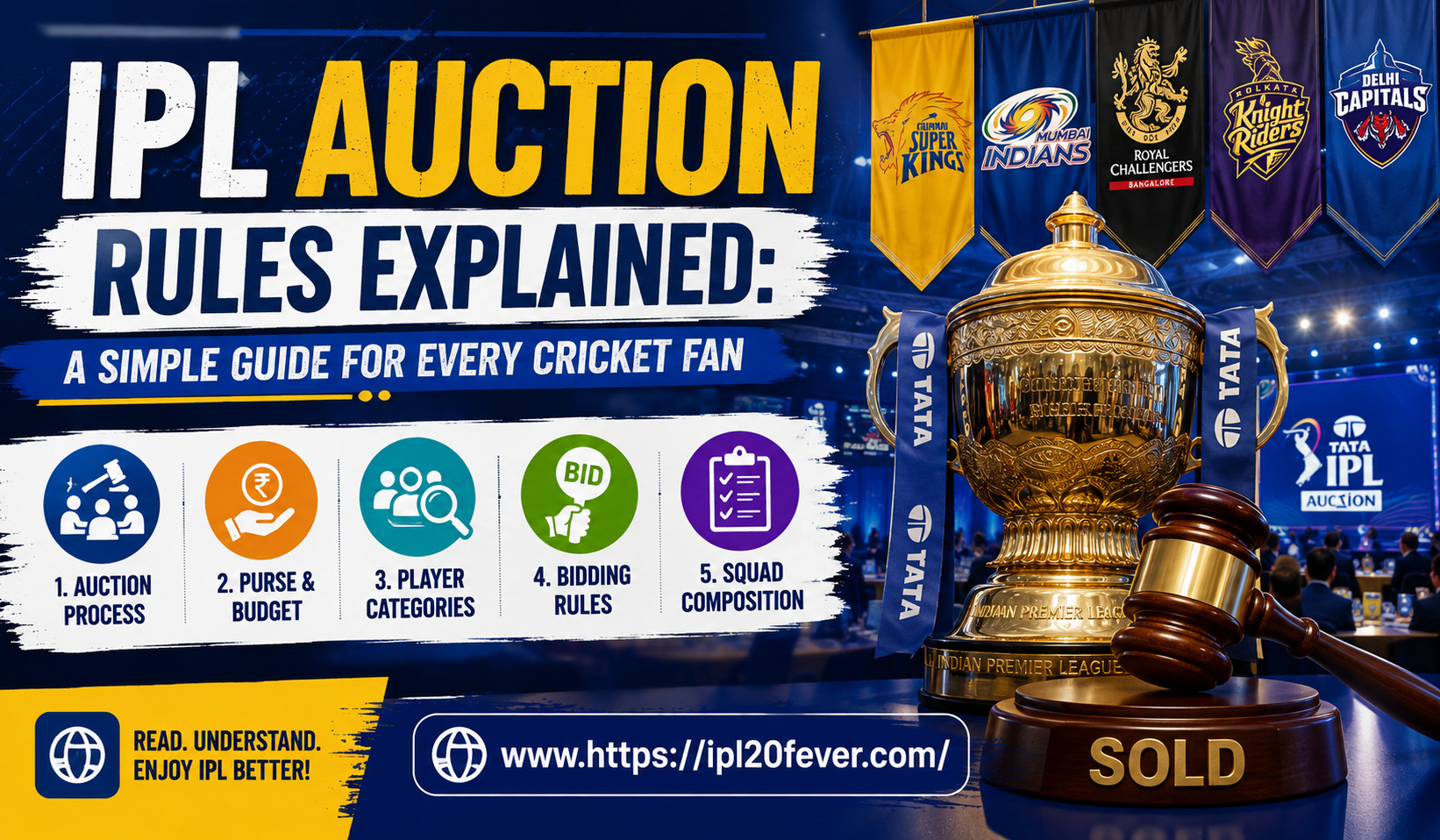
Every year, before the Indian Premier League season begins, there is one event that gets almost as much attention as the matches themselves — the IPL auction. This is where all ten teams sit in one room (or connect online) and buy players for their squad. If you have ever watched the auction and felt a little confused about how it all works, don’t worry. In this blog, we will break down the whole process in plain, easy words, without using any confusing cricket or business terms.
What Is the IPL Auction, Really?
Think of the IPL auction like a big shopping event, but instead of buying clothes or electronics, teams are buying cricket players. Each team gets a fixed amount of money to spend, and they use that money to bid for players they want in their squad. The player who gets the highest bid joins that team for the season.
The auction is important because it decides which players will play for which team. A good auction can turn a weak team into a strong one, and a bad auction can hurt even a talented squad. That is why team owners, coaches, and analysts spend weeks preparing before the big day.
The Money Each Team Gets: The Purse
Before the auction starts, every team is given a fixed budget. In cricket language, this budget is called the “purse.” You can simply think of it as the total amount of money a team has in its pocket to spend on players.
For the 2026 season, each franchise started with a purse of ₹151 crore, which is more than what teams had in earlier years. This was an increase from previous seasons, allowing teams to make bigger investments in players. However, teams don’t all start the auction with the same amount left to spend. That is because some of the money is already used up before the auction even begins, mainly through something called “retention.”
What Is Retention?
Before the auction begins, teams are allowed to keep a certain number of players from their previous squad without bidding for them. This is called retention. It simply means the team says, “We already have this player, and we want to keep him for next season.”
The number of players a team can retain, and the rules around it, can change from year to year depending on what the league decides. For example, in the 2025 season, each franchise could retain a maximum of six players from their existing squad. These retained players use up a part of the team’s purse depending on how the pricing is structured that year.
Once a team decides who to retain, whatever money is left over is what they bring to the actual auction table.
What Is RTM (Right to Match)?
You may have heard the term RTM used a lot around auction time. RTM stands for “Right to Match,” and it is a special option that lets a team buy back a player they released, even if another team has already placed the winning bid.
Here’s how it usually works in simple terms: if Team A releases a player before the auction, and Team B ends up winning that player at the auction with the highest bid, Team A gets one last chance. They can say, “We want to match that price,” and if they do, the player goes back to Team A, not Team B. Team B does not get anything in return other than the fact that they pushed the price up.
This rule exists so that teams don’t lose their long-term, familiar players too easily just because someone else was willing to spend more money.
It’s worth noting that RTM is not always available every season. For the 2026 mini-auction, there were no RTM cards available at all, marking a shift from previous years.Instead, there was no minimum retention requirement, and teams were free to retain or release players as they saw fit within squad limits. This meant if a team wanted a former player back, they had to simply outbid everyone else, with no safety net.
So remember, RTM rules can change every season depending on whether it’s a “mega auction” (a bigger auction where teams build squads almost from scratch) or a “mini auction” (a smaller auction where teams just fill in a few gaps).
Squad Size Rules
Every team has a limit on how many players they can have in their squad, and how many of those can be foreign players. This keeps things fair and balanced across the league.
A squad can contain up to 25 players, with a maximum of eight from overseas, and the minimum squad size is 18. This means a team cannot go on an unlimited shopping spree. Once they hit 25 players, they simply cannot buy any more, no matter how much money is left in their purse. And no matter how many great foreign players are available, a team can never have more than eight of them in the squad at once.
This rule matters a lot during the auction because it forces teams to plan carefully. If a team already has seven overseas players, they know they only have room for one more, so they have to be extra careful about who they bid for next.
How the Actual Bidding Works
Once the auction starts, players are called out one by one, usually starting with the more expensive, high-profile names first. Each player has something called a “base price,” which is simply the minimum amount a team must offer to be considered.
Players are placed into different price categories before the auction, with the highest base price category being around ₹2 crore and the lowest being around ₹30 lakh. This means before the auction even begins, every player already knows the minimum price they can be bought for. Some players set this base price higher because they believe they are worth more, while newer or less experienced players usually go with a lower base price.
When a player’s name is called, teams that are interested start raising their hands or paddles to bid. The bidding usually goes up in fixed jumps, similar to how bidding works at any auction house. Teams keep bidding against each other until only one team is left willing to pay the highest amount. That team wins the player.
If no team wants to bid at all, even at the base price, the player is marked as “unsold.” Being unsold doesn’t always mean the end of the road, though.
What Happens to Unsold Players?
Just because a player doesn’t get a bid the first time their name is called doesn’t mean they are completely out of the picture. If a player goes unsold in the auction, he can still find a buyer in the accelerated rounds that happen towards the end of the event.
Think of the accelerated round like a second chance. Teams submit a list of the unsold players they are still interested in, and then those players are brought back into the bidding process near the end of the auction. This is helpful for teams that may have missed out on a player earlier due to fast bidding or lack of funds at the time, but now have some purse left and see an opportunity.
Salary Caps for Overseas Players
Another important rule that has come up in recent years is a limit on how much an overseas player can be paid, no matter how high the bidding war goes. The maximum fee an international player can receive is the lower of two values: the highest retention price from that season, or the highest auction price recorded at the previous mega auction. This is done to control spending and prevent one or two star overseas players from eating up a team’s entire budget.
Why Understanding These Rules Matters
If you’re a cricket fan, knowing these rules changes the way you watch the auction. Instead of just seeing numbers flash on a screen, you start understanding the strategy behind every decision. You’ll notice when a team is holding back money for a big player they want later, or when they’re rushing to fill their overseas quota before it’s too late.
The IPL auction is not just about who has the most money. It’s about smart planning, understanding player value, and making quick decisions under pressure. Teams that manage their purse well, balance their retentions wisely, and know when to bid aggressively or hold back usually end up building the strongest squads.
Final Thoughts
The IPL auction might look chaotic and fast-paced from the outside, but once you understand the basic rules — the purse, retention, RTM, squad limits, base prices, and the accelerated round — everything starts to make a lot more sense. Rules can shift slightly from year to year, especially between mega auctions and mini auctions, so it’s always worth checking the latest updates before the big day.
The next time you sit down to watch the IPL auction live, you’ll not just be watching numbers go up on a screen — you’ll actually understand the game behind the game.